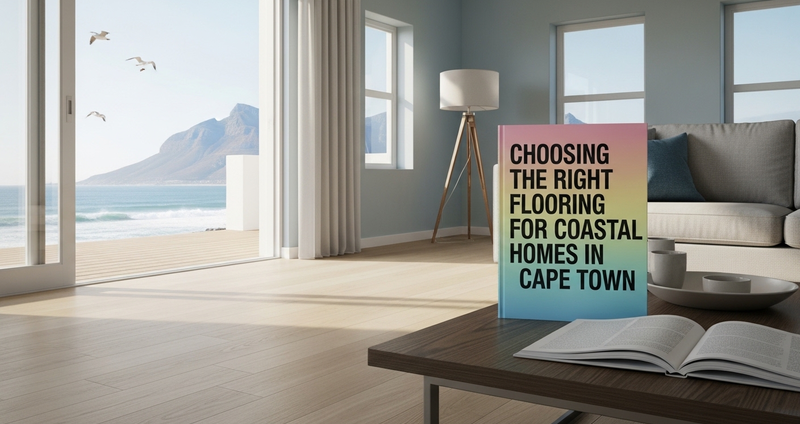
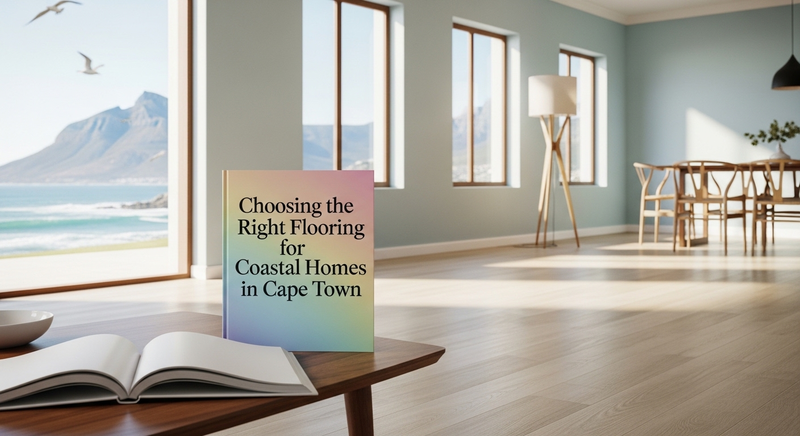
Choosing the Right Flooring for Coastal Homes in Cape Town
The wrong floor in a Cape Town coastal home doesn’t just look bad after a few years — it fails completely. Choosing the right flooring for your seaside home requires prioritizing 100% waterproof materials to withstand high humidity, salt spray, and sandy feet.
Key Takeaways: Flooring for Coastal Homes in Cape Town
-
-
- Salt air, humidity, and UV exposure are the three biggest threats to flooring in Cape Town coastal homes — and most standard flooring options aren’t built to handle all three at once.
- Luxury vinyl plank (LVP) and porcelain tiles consistently outperform other flooring types in coastal conditions, offering near-total moisture resistance and easy maintenance.
- Solid hardwood flooring is one of the worst choices for a home near the ocean — the combination of humidity and salt air causes warping, buckling, and premature deterioration.
- There’s one flooring material that most coastal homeowners overlook that offers the perfect balance of durability, style, and moisture resistance — and it might surprise you.
- LT Cape Flooringspecializes in coastal-ready flooring solutions tailored to Cape Town’s unique climate conditions, helping homeowners make choices that last.
-
Living near the ocean in Cape Town is one of life’s great privileges. The views, the breeze, the lifestyle. But that same ocean air that makes it so beautiful is actively working against your home’s interior. Salt-laden wind, high humidity levels, intense summer UV rays, and constant sand tracked in from the beach create a perfect storm of flooring damage that catches many homeowners completely off guard. The good news is that the right flooring can handle all of it — and still look stunning.
Whether you’re renovating a Sea Point apartment, building a new home in Bloubergstrand, or refreshing a holiday house in Hout Bay, flooring decisions matter more in coastal environments than almost anywhere else. This guide breaks down exactly what works, what doesn’t, and why — so you can make a confident, informed choice.
Cape Town’s Coastal Climate Will Destroy the Wrong Floor Fast
Cape Town sits at the meeting point of the Atlantic and Indian Oceans, giving it a Mediterranean climate that’s deceptively demanding on building materials. Summer temperatures regularly climb past 30°C, while the Cape Doctor — the city’s notorious southeasterly wind — carries salt and moisture deep into homes, even those several blocks from the shoreline. Relative humidity in coastal suburbs like Clifton, Camps Bay, and Bloubergstrand regularly sits between 70% and 85%, particularly during autumn and winter months.
What this means for your floors is significant. Materials expand and contract with temperature swings. Moisture seeps into porous surfaces and causes swelling, rot, and mold. Salt particles land on floors and act like microscopic abrasives, slowly wearing down finishes. UV radiation bleaches colours and degrades surface coatings. Standard flooring sold in inland showrooms simply isn’t engineered with these combined stressors in mind.
The Biggest Threats Your Floor Faces Near the Ocean
Before choosing a flooring material, it helps to understand exactly what you’re up against. The coastal environment in Cape Town creates four distinct threats — and the best flooring choices address all of them simultaneously.
Salt Air Corrosion and How It Damages Flooring Materials
Salt air is perhaps the most underestimated threat in a coastal home. Microscopic salt particles suspended in the air settle on every surface, including your floors. Over time, these particles penetrate the finish of susceptible materials, breaking down adhesives, corroding metal components in click-lock flooring systems, and accelerating the degradation of surface coatings. Flooring materials with sealed, non-porous surfaces — like porcelain tiles and quality vinyl plank — are significantly more resistant to this ongoing salt assault.
Humidity and Moisture: The Hidden Enemy of Wood Floors
High humidity is wood’s worst enemy. When ambient moisture levels fluctuate — as they do dramatically in Cape Town’s coastal suburbs between dry summer months and wet winters — wood-based flooring absorbs and releases moisture, causing it to expand and contract repeatedly. This cycle leads to cupping (where the edges of planks rise above the centre), gapping, and eventually structural failure. Even engineered wood, which handles humidity better than solid timber, has its limits in environments where humidity regularly exceeds 75%.
Sand Abrasion and High Foot Traffic in Coastal Homes
Every coastal homeowner knows the reality: sand gets everywhere. Fine beach sand tracked in on feet, towels, and beach gear acts like sandpaper on floor finishes. Softer flooring materials — including many laminates and some vinyl options — show scratch patterns and surface wear far sooner than harder surfaces like porcelain tile or high-wear-rated LVP. For homes that double as holiday rentals or regularly host guests, abrasion resistance is a non-negotiable specification, not an optional upgrade. For more information on suitable flooring options, check out the best flooring options for South African climate.
UV Fading From Cape Town’s Intense Summer Sun
Cape Town receives over 3,000 hours of sunshine per year, and coastal homes — often designed with large windows and open-plan layouts to maximise those ocean views — channel significant direct sunlight onto floor surfaces for large portions of the day. Without adequate UV resistance, flooring colours fade, surface coatings degrade, and materials can become brittle. This is particularly problematic for darker-coloured timber finishes and some vinyl products not rated for high UV exposure.
The Best Flooring Options for Coastal Homes in Cape Town
Not all flooring is created equal, and in a coastal environment, the gap between a good choice and a poor one is measured in years of lifespan and thousands of rands in replacement costs. The materials below have proven track records in high-humidity, salt-air environments and offer the best combination of durability, aesthetics, and practical performance for Cape Town homes.
Each option has its own strengths depending on your specific location, budget, and design preferences. A ground-floor beachfront apartment in Clifton has different requirements than a hilltop home in Llandudno, even though both are technically coastal. Consider your specific exposure level when weighing these options.
| Flooring Type | Moisture Resistance | Salt Air Resistance | UV Resistance | Coastal Rating |
|---|---|---|---|---|
| Luxury Vinyl Plank (LVP) | Excellent | Excellent | Good (UV-rated options) | ⭐⭐⭐⭐⭐ |
| Porcelain Tile | Excellent | Excellent | Excellent | ⭐⭐⭐⭐⭐ |
| Engineered Wood | Good | Moderate | Moderate | ⭐⭐⭐⭐ |
| Bamboo | Good | Good | Moderate | ⭐⭐⭐⭐ |
| Polished Concrete | Excellent | Excellent | Excellent | ⭐⭐⭐⭐⭐ |
| Solid Hardwood | Poor | Poor | Moderate | ⭐ |
| Standard Laminate | Poor | Poor | Poor | ⭐ |
Vinyl Plank Flooring: The Top Choice for Moisture-Heavy Environments
Luxury vinyl plank flooring has become the go-to recommendation for coastal homes — and for good reason. Modern LVP is 100% waterproof through its entire core, not just at the surface. It won’t swell, warp, or delaminate when exposed to moisture, making it one of the few flooring options that can handle Cape Town’s coastal humidity without special treatment or ongoing sealing.
The best LVP products for coastal conditions carry a wear layer of at least 12 mil (0.3mm) for residential use, with 20 mil options available for higher-traffic areas or rental properties. Brands like Karndean and Moduleo offer ranges specifically engineered for high-humidity environments, with anti-microbial coatings that resist mold and mildew growth — a real advantage in homes that experience condensation during Cape Town’s winter months.
From a design perspective, LVP has come a long way. Today’s products convincingly replicate the look of hardwood, stone, and tile, meaning you don’t have to sacrifice the warm, natural aesthetic that many coastal homeowners want. It’s also warmer underfoot than tile, making it a more comfortable choice for bedrooms and living areas in homes that cool down significantly during Cape Town’s winters.
Porcelain and Ceramic Tiles: Built to Handle Salt, Sand and Sun
Porcelain tile is one of the most durable flooring materials available anywhere, and it thrives in coastal conditions. With a water absorption rate of less than 0.5% — compared to natural stone which can absorb up to 5% — porcelain is virtually impervious to moisture. Salt air has no meaningful effect on a fully vitrified porcelain tile surface, and properly grouted tile installations create a seamless barrier against moisture penetration at the substrate level.
Engineered Wood: The Closest You Can Get to Hardwood Near the Coast
Engineered wood gives you the look and feel of real timber without the structural vulnerability that makes solid hardwood such a poor coastal performer. Its construction — a real hardwood veneer bonded over multiple layers of cross-ply plywood — gives it significantly better dimensional stability than solid wood, allowing it to handle moderate humidity fluctuations without the dramatic warping and gapping that plague solid timber floors in coastal environments.
Coastal Installation Tip: When installing engineered wood in a Cape Town coastal home, choose a product with a minimum 4mm wear layer and a moisture-resistant HDF or plywood core rather than an MDF core. MDF cores absorb moisture far more readily and will swell and delaminate in high-humidity environments. Always acclimate the boards for a minimum of 72 hours in the installation space before fitting, and maintain indoor humidity between 45% and 65% using a dehumidifier during Cape Town’s wet winter months.
The species of timber used in the veneer layer matters enormously in a coastal context. Harder, denser species like European Oak, Spotted Gum, and Blackbutt resist surface scratching from sand far better than softer options like Pine or American Cherry. European Oak in particular has become the dominant choice for high-end Cape Town coastal homes, offering a Janka hardness rating of around 1,360 lbf — hard enough to handle daily beach-house traffic while still delivering the warm, natural grain patterns that define coastal interior design.
The honest limitation of engineered wood is that it does have a ceiling for moisture tolerance. In rooms with direct ocean exposure — think a ground-floor unit in a Sea Point block of flats where windows stay open through summer — or in bathrooms and laundry areas, even the best engineered timber will eventually show stress. In those specific zones, LVP or porcelain tile is the smarter call. Engineered wood earns its place in bedrooms, living areas, and dining spaces where it delivers maximum visual impact with manageable moisture exposure.
Bamboo Flooring: A Durable Eco-Friendly Option for Coastal Homes
Bamboo flooring is technically a grass, not a wood, and that biological distinction matters when it comes to coastal performance. Bamboo fibres are naturally dense and contain less cellular space for moisture absorption compared to most timber species, giving strand-woven bamboo in particular a notable advantage in humid environments. Strand-woven bamboo — where bamboo strands are compressed under extreme pressure with an adhesive binder — achieves a Janka hardness rating of up to 5,000 lbf, making it one of the hardest flooring materials available and extremely resistant to the sand abrasion that erodes softer floor surfaces quickly in coastal homes.
It’s a practical choice that also satisfies the growing demand for sustainable building materials, which aligns well with Cape Town’s environmentally conscious design community. However, bamboo isn’t without its nuances in a coastal setting.
-
-
- Choose strand-woven bamboo over horizontal or vertical bamboo — it’s denser, harder, and significantly more moisture-resistant
- Look for low-VOC adhesive binders in the manufacturing process, particularly important in well-sealed, humid coastal homes
- Carbonised bamboo (which has a darker, richer tone) is slightly softer and less moisture-resistant than natural bamboo — factor this into your choice if aesthetics are driving you toward the darker finish
- Seal the floor annually with a water-based polyurethane finish rated for high-humidity environments to maintain moisture resistance over time
- Avoid bamboo in wet areas like bathrooms and kitchens — despite its relative moisture resistance, prolonged water exposure will still cause damage
-
For coastal homes in Cape Town’s less extreme humidity zones — suburbs like Constantia, Hout Bay, or upper Camps Bay — strand-woven bamboo is a genuinely excellent flooring choice that offers durability, sustainability, and a natural aesthetic that complements the organic textures and tones of coastal interior design.
Polished Concrete: Low Maintenance and Naturally Moisture-Resistant
Polished concrete is the ultimate no-compromise floor for a coastal home. When properly sealed, it is completely impervious to moisture, salt air, UV exposure, and sand abrasion — none of the four coastal threats that damage other flooring types have any meaningful effect on a well-finished concrete surface. It doesn’t harbour mold, it doesn’t trap sand, and it doesn’t require specialist cleaning products. A weekly sweep and occasional mop with a pH-neutral cleaner is genuinely all the maintenance it needs. For homeowners who want maximum durability with minimum ongoing effort — particularly in open-plan coastal homes that flow between indoor and outdoor living areas — polished concrete is hard to beat.
Flooring to Avoid in Coastal Cape Town Homes
Just as important as knowing what works is knowing what fails — and in a coastal environment, some flooring materials fail spectacularly. The combination of salt air, humidity, UV exposure, and sand creates conditions that expose every weakness in vulnerable flooring types, often within just a few years of installation.
The following options might seem appealing in a showroom — they look great, they’re often cheaper upfront, and they’re widely available — but their performance near the Cape Town coastline tells a very different story over time.
Why Solid Hardwood Warps and Buckles Near the Ocean
Solid hardwood flooring is a poor investment in any Cape Town coastal home, full stop. Solid timber planks are hygroscopic by nature, meaning they continuously absorb and release moisture from the surrounding air. In a coastal environment where humidity swings between dry summer conditions and wet, salt-laden winter air, solid hardwood planks undergo continuous expansion and contraction cycles that inevitably lead to cupping, warping, gapping, and in severe cases, complete structural failure of the floor. The salt particles in the air accelerate the breakdown of surface finishes, meaning you’ll be sanding and refinishing far more frequently than the standard 10 to 15-year cycle recommended for inland installations. The upfront cost of quality hardwood timber, combined with its dramatically shortened lifespan near the coast and the ongoing maintenance burden, makes it a flooring choice that simply doesn’t stack up financially or practically in this environment. For more information on flooring options for South African climate, consider exploring alternative materials.
Laminate Flooring and Its Vulnerability to Moisture Damage
Standard laminate flooring is built around a high-density fibreboard (HDF) core, and HDF and moisture are a notoriously bad combination. When water or sustained humidity penetrates the joints between laminate planks — which it will in a coastal home, regardless of how well the floor is initially sealed — the HDF core swells, causing the distinctive raised edges and bubbling that are impossible to reverse without full replacement. What makes this particularly frustrating for homeowners is that the damage often isn’t immediately visible; by the time it becomes obvious, the subfloor underneath has frequently also been compromised.
Some manufacturers now produce what they label as “waterproof laminate,” but this description warrants scrutiny. These products typically feature a water-resistant surface layer, but the core material and the locking joints remain vulnerable to moisture ingress over time. In Cape Town’s coastal conditions — where ambient humidity alone can cause damage without any direct water contact — even water-resistant laminate products carry a significant risk of premature failure. The modest cost savings over LVP or tile simply don’t justify the replacement costs and frustration that typically follow within three to five years of coastal installation.
Outdoor Flooring for Coastal Cape Town Patios and Decks
Outdoor living is central to the Cape Town coastal lifestyle. Patios, decks, and entertainment areas that spill out toward ocean views need flooring that performs in the full force of the coastal environment — direct UV exposure, rain, salt spray, and temperature extremes from cold Atlantic winters to scorching summer afternoons. The right outdoor flooring material doesn’t just survive these conditions; it maintains its structural integrity and visual appeal through years of them.
-
-
- Slip resistance is non-negotiable — wet outdoor surfaces near pools or ocean spray areas require a minimum R11 slip rating
- UV stability determines how quickly your outdoor floor fades and degrades under Cape Town’s intense sunshine
- Salt resistance is critical for homes within direct spray distance of the ocean, particularly in areas like Clifton and Bloubergstrand
- Thermal comfort matters in summer — some materials like dark natural stone absorb heat and become uncomfortably hot underfoot during peak summer afternoons
- Drainage design should complement your flooring choice — grout joints, gaps between deck boards, and surface gradients all need to be factored into outdoor installations
-
Outdoor flooring in Cape Town’s coastal suburbs takes a beating that most inland homeowners never have to consider. The combination of the Cape Doctor wind carrying salt and debris, the Atlantic Ocean’s cold and damp air, and the summer sun’s intensity demands materials that are specified and installed with these exact conditions in mind — not adapted from indoor products or generic outdoor ranges that haven’t been tested in this specific environment.
Budget is also worth addressing honestly here. Premium outdoor flooring materials — quality composite decking, large-format porcelain pavers, or natural stone — carry a higher upfront cost than cheaper alternatives. But in a coastal environment, that investment pays for itself quickly through reduced maintenance costs, avoided replacement expenses, and the sustained property value that quality outdoor spaces deliver in Cape Town’s competitive real estate market.
Composite Decking: Low Maintenance and Sun-Resistant
Composite decking has become the dominant choice for coastal decks and entertainment areas in Cape Town for one straightforward reason: it’s engineered to handle exactly the conditions that destroy natural timber decking. Made from a blend of recycled wood fibres and PVC or polyethylene, quality composite decking like Trex Transcend or Fiberon Horizon is resistant to moisture, rot, salt air, UV fading, and insect damage — all in a single product. It won’t splinter, it doesn’t require annual sealing or staining, and it maintains its structural integrity and colour stability far longer than treated pine or even hardwood timber decking in coastal environments.
The practical maintenance difference between composite and timber decking is dramatic. Timber decks in coastal Cape Town typically require sanding and resealing every one to two years to prevent salt-accelerated weathering and UV degradation — a cost and effort burden that adds up significantly over a decade of ownership. Quality composite decking needs nothing more than an occasional wash with soapy water. For a holiday home or rental property where regular maintenance isn’t always practical, that difference is genuinely transformative.
Natural Stone Pavers: The Premium Option for Outdoor Coastal Spaces
Natural stone pavers — particularly granite, slate, and quartzite — offer a timeless, high-end aesthetic for coastal outdoor spaces and perform well in Cape Town’s coastal conditions when correctly specified and installed. Granite is the standout performer among natural stones in salt-air environments, with its extremely low porosity (typically less than 0.5%) making it highly resistant to moisture absorption and salt penetration. Slate offers excellent slip resistance in its natural cleft finish and handles temperature fluctuations without the thermal cracking that affects more porous stone types. The critical factor with any natural stone installation outdoors is professional sealing at installation and consistent resealing every two to three years — without this, even low-porosity stones will eventually show salt efflorescence and surface staining in direct coastal exposure.
UV-Resistant Outdoor Tiles: Practical and Stylish
Large-format porcelain pavers have emerged as one of the most practical outdoor flooring solutions for Cape Town coastal homes, combining the near-zero maintenance of porcelain with the scale and visual impact that contemporary outdoor design demands. Porcelain pavers rated for outdoor use — look for a PEI rating of 4 or 5 and a frost resistance classification — are impervious to moisture, completely unaffected by salt air, and engineered with UV-stable pigments that maintain colour accuracy through years of intense Cape Town summer sun.
Sizes like 600x600mm, 800x800mm, and the increasingly popular 1200x600mm formats create clean, expansive outdoor surfaces that visually extend living spaces and complement the open, breezy aesthetic of coastal architecture. Many ranges are now produced with matching indoor tiles, allowing for a seamless visual flow between interior living spaces and outdoor entertainment areas — a design move that’s particularly effective in the open-plan homes that define Cape Town’s coastal property market.
Installation of large-format outdoor porcelain requires specialist expertise. The tiles’ size and weight demand a perfectly level, reinforced substrate, and the grouting and drainage design needs to account for Cape Town’s heavy winter rainfall. Cutting large porcelain pavers also requires diamond-tipped wet saw equipment — this is not a DIY flooring project, and cutting corners on installation will compromise both the performance and the visual outcome of what is otherwise an exceptional outdoor flooring choice.
How to Maintain Coastal Floors and Make Them Last Longer
The best flooring choice in the world will still fail prematurely if it isn’t maintained correctly in a coastal environment. Salt build-up, humidity fluctuations, and fine sand work continuously against your floors — but a consistent, simple maintenance routine keeps these forces in check and dramatically extends the lifespan of any flooring type.
The good news is that maintaining coastal floors doesn’t require expensive products or hours of effort. It requires the right habits applied consistently. The homeowners who get decades of performance from their coastal floors aren’t doing anything extraordinary — they’re just doing the right things regularly.
How to Protect Floors From Salt Air Build-Up
Salt particles that settle on floor surfaces don’t just sit there — they attract moisture from the air and create a corrosive micro-environment on your floor’s finish. The most effective defence is straightforward: increase the frequency of dry cleaning. In coastal Cape Town homes, sweeping or dry-mopping daily rather than weekly removes salt deposits before they have time to interact with moisture and begin breaking down surface coatings. Door mats at every entry point — particularly those facing the ocean — capture a significant portion of salt and sand before it reaches your floor surface. For sealed floors like polished concrete, engineered wood, and LVP, a quarterly wipe-down with a diluted solution of warm water and pH-neutral cleaner removes accumulated salt residue that dry cleaning misses. Never use vinegar-based or acidic cleaning solutions on sealed floors — the acid degrades sealant coatings and accelerates the exact damage you’re trying to prevent.
The Best Cleaning Routine for High-Humidity Coastal Homes
Humidity management is as important as surface cleaning in a coastal home. Running a dehumidifier during Cape Town’s wet winter months — targeting an indoor relative humidity level between 45% and 60% — protects wood-based floors from the expansion and contraction cycles that cause structural damage over time. For hard surface floors like tile and LVP, damp mopping weekly with a well-wrung mop (never a soaking wet one) and a pH-neutral cleaner keeps surfaces clean without introducing excess moisture at joints and edges. Check grout lines in tiled floors annually for hairline cracks or deterioration — even small grout failures in a coastal environment allow moisture to reach the substrate, which can cause significant damage before it becomes visible on the surface.
The Right Floor for a Cape Town Coastal Home Comes Down to One Thing
Every flooring decision in a coastal Cape Town home comes down to a single principle: prioritise performance over appearance. The most beautiful floor in the showroom is worthless if it warps, fades, or deteriorates within three years of coastal installation. The materials that look great and last — luxury vinyl plank, porcelain tile, polished concrete, quality engineered wood — all exist at the intersection of coastal performance and genuine design appeal. For more insights, check out the best flooring options for South African climate. That intersection is exactly where your decision should land.
Start with your specific location and exposure level. A beachfront ground-floor apartment demands a different specification than a hillside home two kilometres from the shore. Then layer in your lifestyle — rental property, holiday home, or permanent residence each has different traffic and maintenance realities. Match those factors to the right material, invest in professional installation, and commit to a simple maintenance routine. Done right, your coastal floor should last 20 to 30 years and look better than the day it was laid.
Frequently Asked Questions About Flooring for Coastal Homes in Cape Town
Coastal flooring is one of those topics where the questions homeowners ask most often reveal exactly how much conflicting information is circulating. Showrooms sometimes prioritise sales over suitability, and general flooring advice doesn’t always account for the specific demands of Cape Town’s ocean environment. These answers cut through the noise.
The questions below cover the most common points of confusion and concern for Cape Town homeowners navigating flooring decisions for coastal properties — from direct beachfront apartments to homes several suburbs back from the shoreline that still experience meaningful coastal humidity and salt air exposure.
-
-
- Which flooring is truly waterproof versus water-resistant — and why the difference matters in a coastal home
- Whether any natural timber flooring can realistically work near the Cape Town coast
- How Cape Town’s specific climate compares to other South African cities for flooring purposes
- The honest performance profile of bamboo flooring in a coastal setting
- How frequently different flooring types need sealing or treatment to maintain coastal performance
-
The answers below are based on the real-world performance of these materials in Cape Town’s specific coastal conditions — not generic flooring advice that could apply anywhere.
What is the most waterproof flooring option for a coastal home in Cape Town?
Luxury vinyl plank (LVP) and porcelain tile are the two most waterproof flooring options available for coastal Cape Town homes. Both are 100% waterproof through their entire thickness — not just at the surface — meaning that even sustained moisture exposure won’t cause swelling, warping, or structural failure. Polished concrete with a penetrating epoxy or polyurethane sealer runs a close third, offering complete moisture impermeability once sealed correctly.
The distinction between waterproof and water-resistant is critical here. Water-resistant flooring — including many laminates marketed as moisture-tolerant and some lower-specification vinyl products — can handle brief surface moisture exposure but will eventually fail when exposed to the sustained ambient humidity of a coastal environment. In Cape Town’s coastal suburbs, water-resistant is not good enough. Specify genuinely waterproof products, verify the claim extends through the core material and not just the surface layer, and confirm that the locking joints and adhesive systems are also moisture-rated.
Can I install hardwood flooring in a coastal Cape Town home?
Technically, yes. Practically, it’s a decision that will cost you significantly more in maintenance, repairs, and eventual replacement than the initial investment justifies. Solid hardwood is fundamentally incompatible with the sustained humidity levels, salt air, and moisture fluctuations of Cape Town’s coastal environment. The cellular structure of solid timber absorbs atmospheric moisture, causing continuous expansion and contraction that leads to cupping, gapping, warping, and finish breakdown — often within the first two to three years in high-exposure coastal locations.
If the warmth and authenticity of real timber is non-negotiable for your design vision, engineered hardwood with a minimum 4mm European Oak wear layer over a moisture-resistant plywood core is the closest realistic alternative. It delivers genuine timber character and can be sanded and refinished multiple times over its lifespan, but it offers meaningfully better dimensional stability than solid wood in humid conditions. Even then, it should be reserved for rooms with controlled humidity and indirect coastal exposure — not bathrooms, kitchens, or rooms with direct ocean-facing openings.
How does Cape Town’s humidity level compare to other South African cities, and how does it affect flooring?
Cape Town’s coastal suburbs sit at relative humidity levels of 70% to 85% for extended periods during autumn and winter — significantly higher than Johannesburg, which averages 50% to 60% humidity even during its wet summer season. Durban presents a comparable challenge with its subtropical humidity, but Cape Town’s additional salt air component — driven by the Atlantic Ocean and amplified by the Cape Doctor wind — creates a combined stressor that Durban’s Indian Ocean coastline, while humid, doesn’t replicate in exactly the same way. Pretoria and the wider Highveld region are considerably drier, with average humidity levels that allow a much broader range of flooring materials to perform reliably.
What this comparison means practically is that flooring specifications appropriate for a Johannesburg home — including many solid hardwood and standard laminate products — are genuinely unsuitable for direct coastal use in Cape Town without significant performance compromise. Flooring specified for Cape Town’s coastal conditions needs to handle not just moisture, but the combination of high humidity, salt-laden air, UV intensity, and dramatic seasonal temperature variation that characterises the city’s unique Mediterranean-Atlantic climate. Always specify to your actual location, not to a general South African standard.
Is bamboo flooring a good choice for homes near the ocean?
Strand-woven bamboo is a legitimate and often underrated option for coastal homes in Cape Town’s moderate humidity zones. Its extreme density — up to 5,000 lbf on the Janka hardness scale — makes it highly resistant to the sand abrasion that damages softer floor surfaces, and its naturally low moisture absorption rate gives it better humidity tolerance than most solid timber species. For suburbs like Hout Bay, upper Camps Bay, and Constantia, where coastal influence is present but less extreme than direct oceanfront locations, strand-woven bamboo performs reliably and delivers a natural, sustainable aesthetic that suits coastal interior design well.
The caveats are real, though. Bamboo is not appropriate for bathrooms, laundry areas, or any space with direct water exposure. Carbonised bamboo — the darker, warmer-toned variant produced through a heat treatment process — is measurably softer and more moisture-sensitive than natural bamboo, so if you’re drawn to the richer tones of carbonised bamboo for aesthetic reasons, factor that reduced performance into your location and room-by-room decision-making.
Bamboo vs. Engineered Wood for Coastal Homes: At a Glance
Strand-Woven Bamboo: Janka hardness up to 5,000 lbf • Better sand abrasion resistance • Good humidity tolerance • Sustainable material • Cannot be refinished as many times as engineered wood • Best for moderate coastal exposure zones
Engineered European Oak: Janka hardness approximately 1,360 lbf • Multiple refinishing cycles possible • Warmer, more traditional aesthetic • Requires humidity control between 45–65% • Greater design flexibility • Best for controlled indoor environments with indirect coastal exposure
Ultimately, both bamboo and engineered wood earn their place in coastal Cape Town homes when specified correctly for the right rooms and exposure levels. Neither is a universal solution, and neither should be installed in high-moisture zones regardless of their relative coastal resilience compared to solid timber or laminate alternatives.
How often should I seal or treat my floors in a coastal Cape Town home?
Sealing frequency depends on the flooring material and the intensity of your coastal exposure, but the general principle holds across all sealable floor types: coastal environments accelerate sealant degradation, so the standard inland resealing schedule needs to be shortened meaningfully.
-
-
- Polished concrete: Reseal with a penetrating polyurethane or epoxy sealer every 2 to 3 years for interior surfaces; every 1 to 2 years for outdoor or high-traffic areas
- Natural stone (granite, slate, quartzite): Apply a penetrating impregnating sealer annually for outdoor installations; every 2 years for indoor use in coastal homes
- Engineered wood: Recoat the surface finish every 3 to 5 years depending on traffic and UV exposure; full sand-back and refinish every 10 to 15 years
- Strand-woven bamboo: Reseal with water-based polyurethane annually to maintain moisture resistance in coastal conditions
- Porcelain and ceramic tile grout: Apply grout sealer every 1 to 2 years; inspect grout lines annually for hairline cracking that needs repair before moisture infiltration occurs
- LVP and vinyl plank: No sealing required — maintain the factory finish by avoiding abrasive cleaners and using felt pads under furniture legs
-
The simplest way to check whether a sealable floor needs resealing is the water bead test: drop a small amount of water onto the surface and observe what happens. If the water beads up and sits on the surface, the seal is intact. If it absorbs into the material within a few seconds, the seal has degraded and resealing should be done promptly — especially in a coastal home where the consequences of an unsealed floor are significantly more severe than in a dry inland environment.
Beyond scheduled resealing, coastal floors benefit from attention after Cape Town’s major storm events. The Cape Doctor wind drives salt deposits deep into homes and onto floor surfaces during strong southeast wind events, and the wet winter storms from the northwest carry significant moisture that elevates indoor humidity levels rapidly. A thorough clean and a spot-check of sealant integrity after these events catches small issues before they develop into costly floor repairs.
Investing in professional floor maintenance every few years — rather than relying solely on DIY upkeep — also pays dividends in a coastal context. Professional floor finishers have access to commercial-grade sealants and coating systems that outperform retail products in durability and moisture resistance, and their application equipment ensures even, complete coverage that amateur application often misses. The cost of professional maintenance is a fraction of the cost of premature floor replacement driven by inadequate sealing in Cape Town’s demanding coastal conditions.
Your coastal floor is one of your home’s hardest-working surfaces — treat it with the attention it deserves, and it will reward you with decades of performance and beauty that perfectly matches the extraordinary environment it lives in. LT Cape Flooring brings deep expertise in coastal flooring solutions to Cape Town homeowners, helping you choose, install, and maintain floors that genuinely stand up to everything the ocean environment throws at them.
- By: LTCape Admin" >LTCape Admin
- Tags: cape coast flooring reviews, cape coastal flooring, Choosing the right flooring for coastal homes in cape town cost, Choosing the right flooring for coastal homes in cape town south, Choosing the right flooring for coastal homes on Atlatic Seaboard, choosing the right flooring for your home, coastal flooring hermanus, coastline flooring hermanus, coastline flooring specialists
- Category: Flooring for Coastal Homes
- 0 comment
Leave a Reply