Affordable Flooring Installation in Cape Town Suburbs
Looking for affordable flooring installation in Cape Town suburbs? Then you at the right blog post to llearn how to choose the right materials, reduce hidden costs, and find trusted installers, all while staying within budget.
Key Takeaways: Affordable Flooring Installation In Cape Town
-
-
- Laminate, vinyl, and ceramic tiles are the most affordable flooring options available in Cape Town, with laminate being the most popular for residential spaces.
- Professional installation matters — improper surface prep is the number one reason affordable floors fail prematurely.
- Cape Town’s humidity and moisture levels play a significant role in which flooring type will last longest in your specific suburb.
- LT Cape Flooring has been serving Cape Town’s residential and commercial flooring needs since 2016, with a 100% customer satisfaction commitment.
- Keep reading to find out why DIY flooring almost always costs more in the long run — and what to look for in a trustworthy installer.
-
Affordable Flooring in Cape Town Is More Accessible Than You Think
Getting beautiful, durable floors installed in your Cape Town home doesn’t have to drain your renovation budget.
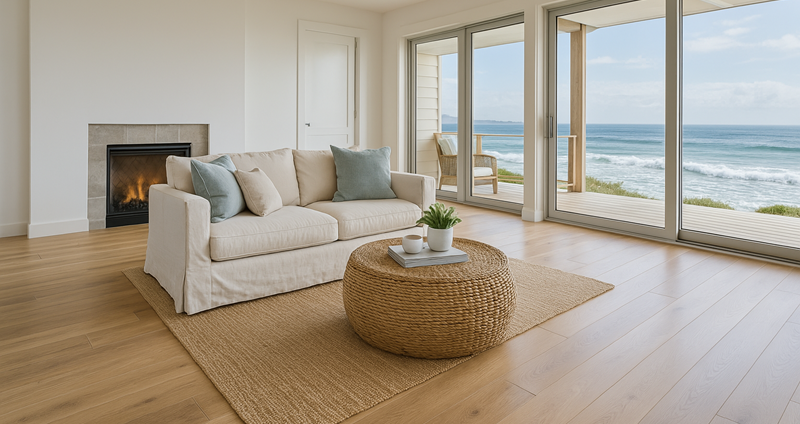
Whether you’re upgrading a Sea Point apartment, renovating a Bellville townhouse, or refreshing a commercial space in the CBD, the range of affordable flooring solutions available in Cape Town today is wider than most homeowners realise. From laminate that mimics high-end hardwood to tough epoxy coatings built for heavy foot traffic, there’s a practical option for every room, lifestyle, and price point.
Quick Comparison: Affordable Flooring Types at a Glance
Flooring Type Best For Durability Relative Cost Laminate Bedrooms, living rooms, offices High Low–Medium Vinyl Tile Kitchens, bathrooms, high-traffic areas Very High Low–Medium Vinyl Sheet Wet areas, commercial spaces Very High Low Ceramic Tiles Bathrooms, kitchens, outdoor areas Very High Medium Epoxy Flooring Garages, warehouses, retail floors Extremely High Medium Colour Screeds Modern interiors, open-plan living High Medium
The key to getting the most value from your flooring investment isn’t just picking the cheapest product off the shelf — it’s matching the right material to the right space and having it installed correctly the first time. That’s where working with an experienced local installer makes all the difference.
Companies like LT Cape Flooring, which has been operating in the Cape Town Metropole since 2016, specialise in exactly this — delivering quality floor installation and repair services across government, commercial, and private residential properties without compromising on finish or longevity.
The Most Popular Affordable Flooring Types in Cape Town
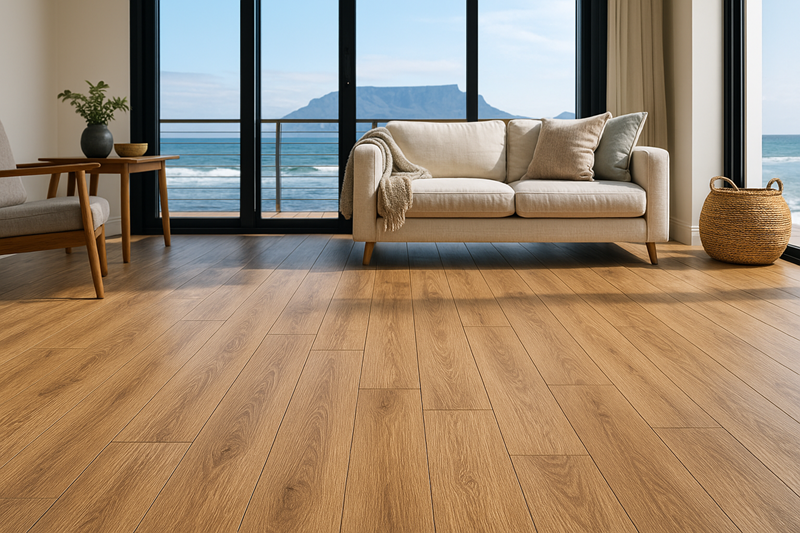
Cape Town homeowners are spoiled for choice when it comes to budget-friendly flooring. Each material has its own strengths, and understanding those differences is what separates a floor that lasts a decade from one that needs replacing in two years.
1. Laminate Flooring
Laminate is the go-to choice for Cape Town residents who want the warmth and visual appeal of hardwood without the hardwood price tag. Modern laminate comes in AC3 residential and higher-grade commercial ratings, with realistic wood-look and stone-look finishes that are genuinely difficult to distinguish from the real thing at first glance. It’s scratch-resistant, relatively easy to maintain, and installs quickly using a floating floor method — no glue or nails required in most cases.
It does have one notable limitation: laminate and sustained moisture don’t mix well. For rooms with high humidity or water exposure, you’ll want to consider a more water-resistant alternative.
2. Vinyl Tile and Vinyl Sheet
Luxury vinyl tile (LVT) and vinyl sheet flooring have surged in popularity across Cape Town, particularly for kitchens, bathrooms, and laundry rooms. Vinyl is 100% waterproof, comfortable underfoot, and available in an enormous range of designs. Vinyl sheet is especially cost-effective for larger areas since it eliminates the need to cut and fit individual tiles, reducing both material waste and labour time.
3. Ceramic Tiles
Ceramic tiles remain one of the most durable and affordable flooring options for Cape Town homes, particularly in wet zones and outdoor areas. They handle Cape Town’s warm summers easily, stay cool underfoot, and require minimal maintenance beyond regular sweeping and mopping. The installation process is more labour-intensive than laminate or vinyl, which does affect the overall cost — but the lifespan of a well-installed ceramic tile floor easily justifies the investment.
4. Epoxy Flooring
Epoxy flooring is a seamless, high-gloss coating applied directly over a concrete substrate. It’s exceptionally hard-wearing, chemical-resistant, and hygienic — making it ideal for garages, workshops, retail floors, and industrial spaces around Cape Town. While it’s not typically a first thought for residential living areas, it’s increasingly being used in modern open-plan homes as a design-forward, low-maintenance surface choice.
5. Colour Screeds
Colour screeds offer a smooth, contemporary aesthetic that works beautifully in minimalist and industrial-style Cape Town interiors. Applied as a thin overlay over existing concrete, they create a seamless finish across large open-plan spaces. They’re particularly popular in Cape Town’s CBD apartments and newer residential developments where a clean, modern look is the priority.
How to Choose the Right Flooring for Your Cape Town Home
Choosing flooring isn’t just about what looks good in a showroom — it’s about what performs in your actual living conditions. The right choice comes down to three key factors: how the room is used, what the local climate demands, and what your budget realistically allows.
Match Your Flooring to Your Room’s Function
Every room in your home places different demands on its floor. A bedroom needs warmth and comfort underfoot — laminate or vinyl tile handles this well. A kitchen or bathroom needs something fully waterproof that can handle spills, splashes, and cleaning chemicals without warping or staining. High-traffic hallways and living areas need a surface that resists scratching and denting over years of daily use. Start by listing what each room actually needs functionally, and then choose your material from there.
Consider Cape Town’s Climate and Humidity
Cape Town’s climate is classified as Mediterranean — warm, dry summers and cool, wet winters. That seasonal shift between dry and humid conditions causes many flooring materials to expand and contract, which, over time, leads to gaps, buckling, or lifting edges if the wrong product was chosen or poorly installed. Suburbs closer to the coast, like Muizenberg, Hout Bay, and Sea Point, experience more consistent moisture exposure and require flooring with stronger water-resistance ratings.
Vinyl and ceramic tiles are the most climate-resilient options for Cape Town’s coastal suburbs. Laminate can work beautifully in drier inland areas like Bellville, Brackenfell, or Paarl — provided the subfloor is properly sealed and a quality underlay is used to buffer against humidity fluctuations.
Balance Aesthetics With Your Budget
The good news is that modern affordable flooring has closed the gap between looks and price significantly. Today’s laminate and luxury vinyl products are visually nearly indistinguishable from natural wood or stone at a fraction of the material cost. Set a realistic per-square-metre budget early, factor in installation costs separately, and prioritise rooms that get the most visibility — your entrance, living room, and kitchen — for your best-looking material
choices.
What Professional Flooring Installation Actually Involves
Most homeowners focus almost entirely on choosing the flooring material and underestimate what the installation process itself involves. Professional installation is where the quality of the final result is really determined — and where cutting corners leads to floors that crack, lift, or look uneven within months.
A professional installer does far more than simply lay boards or tiles. They assess the entire subfloor condition, account for the room’s dimensions and traffic patterns, plan the layout for the most visually appealing result, and handle the technical details that most DIYers overlook entirely.
Surface Preparation Before Installation
Surface preparation is the most critical — and most frequently skipped — step in any flooring installation. Before a single plank or tile is placed, the subfloor must be clean, dry, level, and structurally sound. Any high spots exceeding 3mm over a 1.8-metre span need to be ground down; any low spots need to be filled with a self-levelling compound. Skipping this step is the single biggest cause of premature flooring failure across all material types.
For Cape Town homes with older concrete subfloors — which is common in suburbs like Woodstock, Observatory, and parts of the Southern Suburbs — a moisture barrier or damp-proof membrane may also need to be applied before installation begins. This is non-negotiable in ground-floor rooms or anywhere rising damp is a risk.
The Installation Process Step by Step
- Subfloor assessment — Inspect for moisture, levelness, and structural integrity
- Surface preparation — Grind, fill, and seal the subfloor as needed
- Underlay installation — Lay the appropriate underlay for acoustic and thermal performance
- Material acclimatisation — Allow laminate or hardwood to acclimatise to room temperature for 24–48 hours before laying
- Layout planning — Dry-lay the first few rows to plan the pattern and minimise off-cuts
- Flooring installation — Lay the chosen material according to manufacturer specifications
- Finishing and trim — Install skirting boards, transition strips, and edge trims
- Final inspection — Check for gaps, uneven joints, or any areas requiring touch-up
What Happens After Installation Is Complete
Once installation is finished, there’s typically a settling period before the floor reaches its full performance state. For laminate and vinyl, this is minimal — the floor is usually ready for light foot traffic within a few hours. Epoxy coatings require a full 24-hour cure before foot traffic and up to 72 hours before heavy furniture is moved back in. Your installer should provide specific aftercare instructions based on the material used.
Proper aftercare in the first few weeks significantly extends the lifespan of your new floor. Avoid dragging heavy furniture directly across the surface, use felt pads under chair and table legs, and follow the manufacturer’s recommended cleaning routine. For laminate flooring especially, never use excessive water during cleaning — a damp mop is sufficient.
Why DIY Flooring Rarely Saves You Money in the Long Run
It’s tempting to watch a few installation videos and tackle the job yourself — especially when you’re working with a tight renovation budget. And for very small, straightforward areas, basic DIY vinyl tile laying is manageable. But for anything beyond a small laundry room or bathroom, the risks of a poor DIY outcome quickly outweigh the labour cost savings.
The most common DIY flooring mistakes in Cape Town homes include inadequate subfloor levelling, incorrect expansion gap sizing — laminate requires a 10–12mm gap around the room’s perimeter — and improper adhesive application for glue-down vinyl. Each of these mistakes causes visible, often irreversible damage: boards that buckle in summer heat, tiles that lift at the edges, or floors that creak loudly underfoot.
When you factor in the cost of replacing incorrectly installed materials — which manufacturers typically won’t warranty if professional installation wasn’t used — plus the time and effort involved, the professional installation quote starts looking very reasonable by comparison.
How to Spot a Reliable Flooring Installer in Cape Town
Cape Town has no shortage of flooring contractors, but the quality gap between installers is significant. The cheapest quote on Gumtree and a specialist flooring company with a proven track record are not the same thing — and your floors will show the difference for years to come.
Key Questions to Ask Before You Hire
Before signing any quote, ask your potential installer these specific questions to quickly separate the professionals from the chancers:
- How long have you been installing flooring in Cape Town specifically?
- Can you provide references or photos of recently completed local projects?
- Do you assess and prepare the subfloor as part of your installation service?
- What warranties do you offer on both materials and workmanship?
- Are you registered, insured, and do you provide a written quote before starting?
A credible installer will answer every one of those questions confidently and without hesitation. LT Cape Flooring, for example, operates with a stated 100% customer satisfaction commitment and services government, commercial, and private residential clients across the Cape Town Metropole — the kind of track record that speaks for itself before a single tile is laid.
Red Flags to Watch Out For
Walk away from any flooring contractor who asks for full payment upfront, provides a verbal-only quote with no written breakdown, can’t show you previous Cape Town project examples, or skips any mention of subfloor preparation in their process. These aren’t minor oversights — they’re reliable indicators of poor workmanship ahead. A legitimate installer will always provide a detailed written quote, a clear project timeline, and will inspect the subfloor before confirming their final price.
Get Your Cape Town Floors Done Right Without Breaking the Bank
Affordable flooring installation in Cape Town is genuinely achievable without sacrificing quality — but only when you approach the process strategically. The homeowners who get the best results are the ones who invest time upfront in choosing the right material for their specific space, hire an experienced local installer, and treat the subfloor preparation stage as non-negotiable rather than optional.
Laminate, vinyl, and ceramic tile all offer exceptional value for money when properly installed. The difference between a floor that looks tired after three years and one that still looks sharp after ten comes down almost entirely to installation quality and the right material choice from the start.
Cape Town’s diverse suburban landscape — from humid coastal homes in Hout Bay to drier inland properties in Brackenfell and Kuils River — means there’s no single universal answer for every renovation. What works beautifully in one home may be entirely wrong for another. That’s precisely why working with a flooring specialist who understands local conditions matters more than simply choosing the cheapest available product.
The bottom line is straightforward: get at least three written quotes, ask the right questions, prioritise installers with verifiable local experience, and don’t let a low upfront price override what you know about long-term value.
- Laminate flooring — Best for bedrooms and living areas where warmth and wood-look aesthetics matter most
- Luxury vinyl tile (LVT) — Ideal for kitchens, bathrooms, and any room exposed to moisture or heavy foot traffic
- Vinyl sheet — Most cost-effective for large wet areas and commercial spaces where seamless coverage is needed
- Ceramic tiles — The most durable long-term option for outdoor areas, bathrooms, and high-traffic zones
- Epoxy coatings — The go-to solution for garages, workshops, and modern open-plan interiors requiring a seamless industrial finish
- Colour screeds — Perfect for contemporary Cape Town apartments and new builds prioritising a clean, minimalist aesthetic
FAQ’s About Affordable Flooring Installation In Cape Town
Cape Town homeowners researching affordable flooring installation tend to have the same core questions. Here are the most important ones answered clearly and directly.
What is the most affordable flooring option for Cape Town homes?
Laminate flooring is generally the most affordable option for residential spaces in Cape Town, particularly for bedrooms, living rooms, and home offices. It delivers a high-end wood-look finish at a significantly lower cost than real hardwood, and its floating installation method reduces labour time — which keeps overall project costs down.
Vinyl sheet flooring is the most cost-effective option for wet areas and larger open-plan spaces, as the seamless nature of the material reduces waste and installation complexity. For outdoor areas and bathrooms where durability is the top priority, ceramic tiles offer the best long-term value despite a slightly higher upfront installation cost.
Ultimately, the most affordable choice isn’t always the one with the lowest per-square-metre price — it’s the one that lasts the longest in your specific space with the least maintenance cost over time.
Can laminate flooring be installed in kitchens or bathrooms?
Standard laminate flooring is not recommended for kitchens or bathrooms in Cape Town homes. The core of most laminate boards is made from high-density fibreboard (HDF), which swells and warps when exposed to sustained moisture. For these rooms, luxury vinyl tile or vinyl sheet flooring is the correct choice — both are 100% waterproof and designed specifically for wet-area installation.
How long does professional flooring installation take?
Installation time depends on the size of the area, the flooring type chosen, and the condition of the existing subfloor. A standard bedroom or small living area of approximately 20–30 square metres can typically be completed in a single day by an experienced team. Larger projects spanning multiple rooms or requiring significant subfloor preparation will generally take two to four days.
Epoxy flooring has the longest project timeline due to its curing requirements — the coating itself may be applied in one day, but full cure time before heavy use is typically 48–72 hours. Always confirm the expected project duration with your installer before work begins so you can plan accordingly.
Does LT Cape Flooring service all Cape Town suburbs?
Yes. LT Cape Flooring services the entire Cape Town Metropole, including both residential and commercial properties. Having been established in the Cape Town CBD since 2016, they have completed projects across a wide range of suburbs and property types — from private homeowners and government facilities to commercial retail and office spaces throughout the greater Cape Town area.
How long does affordable flooring typically last with proper care?
With professional installation and proper maintenance, most affordable flooring types installed in Cape Town homes will last well beyond their base warranty periods. The actual lifespan varies by material, traffic levels, and how consistently the floor is maintained.
Expected Lifespan of Common Affordable Flooring Types
Flooring Type Expected Lifespan Key Maintenance Requirement Laminate (AC3 Residential) 10–15 years Damp mop only — no excess water Luxury Vinyl Tile (LVT) 15–20 years Regular sweeping and occasional damp mopping Vinyl Sheet 10–20 years Avoid sharp abrasives and heavy dragging Ceramic Tiles 20–30+ years Regrout every 5–10 years as needed Epoxy Flooring 10–20 years Periodic recoating in high-traffic zones Colour Screeds 10–15 years Seal every 2–3 years to maintain finish
The single biggest factor affecting lifespan across all flooring types is the quality of the original installation. A budget laminate floor installed correctly on a properly prepared subfloor will consistently outlast a premium product laid over an uneven or damp surface. Professional installation isn’t just about aesthetics — it’s a direct investment in how long your floor actually performs.
Regular maintenance is the second most important factor. Ceramic tiles and epoxy coatings are the lowest-maintenance options long-term, while laminate requires the most consistent care to avoid moisture damage at the board joints. Regardless of what you choose, following the manufacturer’s cleaning guidelines and addressing any damage promptly — a chipped tile, a lifted plank edge — prevents small issues from becoming costly replacements.
- By: LTCape Admin" >LTCape Admin
- Tags: affordable flooring cape town, affordable flooring installation in cape town suburbs open now, affordable flooring installation near me, affordable home renovations cape town, affordable tiles cape town, cheap flooring ideas south africa, cheap flooring options south africa, cheapest flooring options south africa, online estimates affordable flooring installation in cape town suburbs, top rated affordable flooring installation in cape town suburbs
- Category: Affordable Flooring Installation Cape Town
- 0 comment
Leave a Reply