
Vinyl Affordable Flooring Installation In Cape Town
Budget-friendly options for vinyl flooring installation in Cape Town generally include materials (sheet, LVT, or SPC) and labou, with a comprehensive service will typically include subfloor prep, installation, and trimmings.
Key Takeaways: Vinyl Affordable Flooring Installation
- Vinyl flooring in Cape Town costs between R500 and R800 per square metre installed — making it one of the most budget-friendly flooring upgrades available for homes and commercial spaces.
- There are three main types of vinyl flooring: LVT Glue Down, SPC Click, and Vinyl Tile — each suited to different budgets, room types, and installation needs.
- The final price depends on more than just the vinyl itself — sub-floor preparation, room complexity, and whether you supply your own material can all shift your total cost significantly.
- Cape Town’s coastal climate creates unique challenges for flooring — moisture, humidity, and temperature shifts mean your choice of vinyl and installation quality matter more than you might think.
- Getting multiple quotes and asking the right questions before hiring an installer can save you thousands — keep reading to find out exactly what to ask.
Getting new floors shouldn’t mean emptying your savings account — and in Cape Town, it doesn’t have to.
Vinyl flooring has become the go-to choice for homeowners across the Cape who want a stylish, durable finish without the price tag of hardwood or stone. Whether you’re renovating a home in the Southern Suburbs or updating a rental property in the Northern Suburbs, understanding what you’re actually paying for — and what affects that final quote — is what separates a smart investment from a costly mistake.
For those exploring options, LT Cape Flooring is one of Cape Town’s specialists in affordable vinyl flooring installation, offering guidance on product selection and installation across the city’s suburbs.
Vinyl Flooring in Cape Town Costs R500–R800/sqm Installed
The installed price for vinyl flooring in Cape Town typically falls between R500 and R800 per square metre. That range covers both the material and the labour — but where your project lands within that range depends on several variables worth understanding upfront.
What That Price Actually Includes
When an installer quotes you R500–R800/sqm, that price generally bundles together the cost of the vinyl product itself, the adhesive or click-lock system used, and the labour to lay it. A real-world example from a 45 sqm installation in Durban came in at R36,000 — which works out to exactly R800/sqm fully installed. That gives you a solid benchmark for what a mid-to-upper range project looks like in practice.
What the quote often doesn’t include is sub-floor preparation. If your existing floor has cracks, uneven patches, or old adhesive residue, those need to be addressed before any new vinyl goes down. This is a separate cost that catches many homeowners off guard — more on that shortly.
The quality of the vinyl you choose also pulls the price in either direction. Entry-level residential LVT Glue Down products sit at the lower end of the range, while commercial-grade or thicker SPC Click products push costs higher. Knowing which product suits your specific room and usage level is the first decision that shapes your entire budget.
Why Vinyl Beats Other Flooring Options on Price
Compared to timber, laminate, or tile, vinyl consistently comes in as the more affordable flooring option per square metre — both in material cost and installation time. Timber flooring can easily exceed R1,200/sqm installed, and natural stone even more. Vinyl gives you the visual appeal of both at a fraction of the cost, with the added benefit of being water-resistant and softer underfoot.

The Real Cost of Getting Flooring Wrong in Cape Town
The cheapest quote isn’t always the cheapest outcome. In a city like Cape Town — where seasonal moisture from the South-Easter wind, coastal humidity, and temperature swings are part of everyday life — a poor installation or wrong product choice can lead to floors that buckle, peel, or delaminate within months.
Hidden Costs That Catch Homeowners Off Guard
Beyond sub-floor prep, there are a few line items that regularly surprise homeowners when the final invoice arrives. Removal and disposal of old flooring is rarely included in a standard quote. If you have old tiles, carpet, or existing vinyl that needs to come up first, expect to factor in additional labour and skip hire costs depending on the volume of material.
Furniture removal is another overlooked cost. Some installers include it, others don’t — and moving heavy items like wardrobes or kitchen units can add hours to the job. Always confirm this upfront when comparing quotes.
Why Cheap Installation Ends Up Costing More
An under-qualified installer who skips proper sub-floor levelling or uses the wrong adhesive for the product will create problems that show up fast. Vinyl that isn’t bonded correctly lifts at the edges. Floors laid over an uneven surface develop visible ridges and wear unevenly. Fixing a failed installation means paying twice — once for the original job and again to strip it out and start over.
Paying R600/sqm for a proper installation will almost always cost less over five years than paying R400/sqm for one done wrong.
What Cape Town’s Climate Does to Poor Quality Floors
Cape Town’s coastal environment is harder on flooring than many homeowners realise. The combination of summer heat, winter rain, and year-round humidity — especially in areas closer to the Atlantic or False Bay — creates conditions where expansion, contraction, and moisture ingress are constant pressures on any floor system.
Quality vinyl — particularly SPC (Stone Plastic Composite) core products — is engineered to handle these conditions. SPC has a rigid core that resists expansion and moisture far better than standard LVT. In contrast, low-quality vinyl with thin wear layers can warp, fade, or delaminate within a single Cape winter if it hasn’t been installed correctly with the right adhesive or underlay.
- Atlantic Seaboard and Sea Point homes face the highest humidity levels year-round
- Southern Suburbs properties deal with significant temperature variation between seasons
- Homes near False Bay experience moisture-heavy air that works into poorly sealed floor edges
- Older homes with concrete sub-floors often have rising damp that must be treated before any vinyl installation
The 3 Types of Vinyl Flooring Available in Cape Town
- LVT Glue Down — Luxury Vinyl Tile that is adhered directly to the sub-floor using a specialist adhesive
- SPC Click — Stone Plastic Composite with a rigid core and a floating click-lock installation system
- Vinyl Tile — Individual self-adhesive or dry-lay tiles, typically the most entry-level option
Each of these three options has a distinct application, price point, and performance profile. Understanding the difference before you buy is what stops homeowners from choosing the wrong product for their space — a mistake that’s far more common than it should be.
1. LVT Glue Down
LVT Glue Down is the most widely used vinyl product in Cape Town’s residential and commercial installations. Each plank or tile is bonded directly to a prepared sub-floor using a pressure-sensitive or hard-set adhesive, which means the floor becomes a permanent, stable surface once laid. This makes it ideal for high-traffic areas like hallways, kitchens, and open-plan living spaces where stability underfoot matters. Residential grade LVT Glue Down suits most homes, while commercial grade variants are engineered with a thicker wear layer — typically 0.5mm to 0.7mm — to handle the punishment of retail, office, or hospitality environments.
2. SPC Click
SPC Click — Stone Plastic Composite — is the premium end of the vinyl flooring market and the fastest-growing product category in Cape Town right now. Its rigid core is made from a blend of limestone powder, PVC, and stabilisers, which gives it an almost zero expansion rate and exceptional resistance to moisture. Unlike glue-down products, SPC Click uses a floating installation system where planks lock together and sit over the sub-floor rather than being bonded to it — making it easier to replace individual planks if damage occurs.
For Cape Town homes where sub-floor conditions aren’t perfect or where underfloor heating is fitted, SPC Click is often the recommended solution. Its dimensional stability means it won’t buckle during the temperature swings common in the Cape’s interior suburbs like Paarl or Stellenbosch, and its click system allows installation directly over most existing floor surfaces, which can reduce prep costs significantly.
3. Vinyl Tile
Vinyl Tile is the most entry-level option of the three and works well in lower-traffic areas, rental properties, or spaces where budget is the primary driver. Individual tiles are either self-adhesive or dry-lay, and while they’re the quickest to install, they’re also the most vulnerable to edge lifting and moisture ingress if not properly sealed. For a Cape Town rental property needing a clean, cost-effective refresh, vinyl tile gets the job done — but for a forever home or a commercial space, the investment in LVT or SPC is almost always worth it.
What Affects the Final Price of Your Vinyl Installation
The R500–R800/sqm installed price is a useful starting point, but your actual quote will be shaped by a combination of factors that are specific to your property, your chosen product, and the scope of work involved. Two homes of exactly the same size can produce very different quotes depending on what the installer finds when they show up.
Understanding what drives cost variation puts you in a much stronger position when comparing quotes — and helps you spot when a low quote is low because something important has been left out.
- Product quality and grade — Residential LVT sits at the lower end; commercial-grade SPC Click pushes costs higher
- Floor size and layout complexity — Larger open-plan spaces are faster to lay and cost less per sqm than rooms with lots of angles, built-ins, or intricate cuts
- Sub-floor condition — Cracked, uneven, or damp sub-floors require remediation before installation can begin
- Material supply — Whether the installer sources the vinyl or you supply it yourself changes the quote structure significantly
- Old flooring removal — Stripping out existing tiles, carpet, or vinyl adds labour and disposal costs
- Location in Cape Town — Travel time and accessibility to certain suburbs can affect installer pricing
Getting clarity on each of these points before you accept a quote means there are no surprises on installation day — and no invoice that suddenly looks very different from the number you agreed to.
Floor Size and Room Complexity
Floor size has a direct impact on cost per sqm — larger, open areas are more efficient to install and installers will often price them more favourably. A 100 sqm open-plan space will generally come in at a lower per-sqm rate than five separate 20 sqm rooms with doorways, built-in cupboards, and irregular angles to navigate. Every cut wastes material, and every tight corner adds time. If your renovation involves multiple smaller rooms, factor in that complexity when budgeting — don’t assume the headline rate applies uniformly across the whole project.
Whether You Supply the Vinyl or the Installer Does
Some Cape Town homeowners choose to source their own vinyl — purchasing directly from a supplier like Smart Industries — and then hire an installer separately for labour only. This can offer cost savings if you’re confident in your product selection, but it also shifts the responsibility for material quality entirely onto you. If the product you’ve supplied has a defect or isn’t suited to your sub-floor type, the installer isn’t liable. When the installer supplies the product, you benefit from their trade pricing, their product knowledge, and typically a combined warranty on both materials and workmanship.
Sub-Floor Preparation and Leveling Costs
This is the single most overlooked cost in any vinyl flooring project. A sub-floor that isn’t flat, clean, and dry will telegraph every imperfection through your new vinyl — visible ridges, uneven wear, and in worst cases, adhesive failure within months. Concrete sub-floors in older Cape Town homes often have surface cracks, high spots, or rising damp that need to be treated with a self-levelling compound or moisture barrier before any product goes down.
Self-levelling compound is priced per bag and applied across the affected area — this cost is almost never included in a base installation quote. Always ask your installer to assess the sub-floor condition during their site visit and provide a separate line item for any preparation work required. A quote that skips this assessment entirely is a red flag.
How to Get the Best Value Vinyl Installation in Cape Town
Value in flooring isn’t just about the lowest price per square metre — it’s about getting a finished floor that performs, looks great, and lasts. Cape Town has no shortage of flooring installers, but the range in quality, professionalism, and pricing transparency is wide. Knowing how to navigate that landscape is what protects your investment.
How to Compare Quotes Without Getting Burned
Never compare quotes based on the total number alone. Two quotes for the same floor area can look similar on paper but include completely different scopes of work. One installer might include sub-floor prep, removal of existing flooring, and furniture moving — another might include none of those line items. When you receive a quote, break it down into cost per sqm, material cost versus labour cost, and what preparation work is or isn’t included. Ask every installer to quote on exactly the same scope — same product, same area, same prep requirements — so you’re making a true comparison.
Questions to Ask Before Hiring an Installer
Before you commit to any installer, ask these questions directly — and pay attention to how confidently and specifically they answer. A knowledgeable installer will have clear, immediate answers. Hesitation or vague responses are worth noting. For more guidance, consider checking out vinyl flooring prices to understand the market better.
- Will you assess my sub-floor before quoting? — Any installer who quotes without seeing the sub-floor is guessing at the prep costs.
- What adhesive do you use for LVT Glue Down, and is it compatible with my sub-floor type? — This matters enormously for bond strength and longevity.
- Does your quote include removal of my existing floor? — If not, get a separate line item for it.
- What warranty do you offer on workmanship? — A confident installer backs their work. One year minimum is a reasonable expectation.
- Are you supplying the vinyl or am I? — Clarify who is responsible for material quality and what happens if a product is defective.
- How do you handle rising damp or moisture in concrete sub-floors? — In Cape Town, this is not a rare problem. You want an installer who has a clear protocol for it.
Vinyl Flooring Is the Smartest Affordable Upgrade You Can Make
At R500–R800/sqm installed, vinyl flooring delivers more visual impact per rand than almost any other home upgrade available to Cape Town homeowners. It handles moisture, traffic, and temperature variation better than most alternatives at twice the price — and when installed correctly on a properly prepared sub-floor, it will serve you for well over a decade without complaints. The key is treating it as a considered investment rather than a race to the lowest quote. Choose the right product for your space, prepare your sub-floor properly, and work with an installer who can demonstrate both knowledge and accountability. Do those three things and your new floors will be one of the best decisions your home ever made.
For expert installation and honest advice on the right vinyl product for your Cape Town home, LT Cape Flooring offers professional flooring solutions across Cape Town’s suburbs — from the Atlantic Seaboard to the Northern Suburbs.
FAQ’s About Vinyl Affordable Flooring Installation In Cape Town
How much does vinyl flooring installation cost per sqm in Cape Town?
Vinyl flooring installation in Cape Town costs between R500 and R800 per square metre, fully installed. That price includes both the material and the labour. A 45 sqm installation, for example, would come in at approximately R22,500 to R36,000 depending on the product grade and sub-floor condition.
Keep in mind that sub-floor preparation, old flooring removal, and furniture moving are often quoted separately. Always ask your installer for a fully itemised quote so you know exactly what the final number covers before you sign off on anything.
What is the difference between SPC Click and LVT Glue Down vinyl?
SPC Click (Stone Plastic Composite) uses a floating installation system where planks click together and sit over the sub-floor without adhesive. It has a rigid core that offers superior moisture resistance and dimensional stability — making it well suited to Cape Town’s coastal climate and homes with underfloor heating.
LVT Glue Down (Luxury Vinyl Tile) is bonded directly to the sub-floor with adhesive, creating a permanent, ultra-stable surface. It’s the more widely used option in both residential and commercial Cape Town installations and comes in residential and commercial grades with varying wear layer thicknesses. SPC Click is generally the better choice where sub-floor conditions are imperfect or where future replaceability matters. LVT Glue Down wins on stability and is typically the preferred option for high-traffic commercial environments.
Do I need to prepare my sub-floor before vinyl installation?
Yes — sub-floor preparation is non-negotiable for a quality vinyl installation. Vinyl is a thin, flexible product that will mirror every imperfection in the surface beneath it. An uneven, cracked, or damp sub-floor will show through the finished floor as visible ridges, cause premature wear, and in some cases lead to adhesive failure.
- Cracks and holes must be filled with a suitable repair compound before laying
- High spots need to be ground down to achieve a flat surface
- Low areas should be corrected with a self-levelling compound
- Rising damp in concrete sub-floors requires a moisture barrier treatment before any vinyl product is installed
- Old adhesive residue from previous flooring must be removed or fully encapsulated
In older Cape Town homes — particularly those with original concrete slabs — rising damp is one of the most common sub-floor issues installers encounter. It’s not something to ignore or work around. A moisture barrier applied before installation protects both the adhesive bond and the vinyl product itself from long-term damage.
Always ensure your installer does a physical site assessment before quoting. Any quote provided without a sub-floor inspection should be treated with caution — the prep costs could change the final number significantly.
Can I supply my own vinyl and just pay for installation?
Yes, many Cape Town installers will work with customer-supplied material and quote for labour only. This approach can reduce costs if you’ve sourced a good product at a competitive price directly from a supplier. A real example from the sources confirms this is a standard arrangement — a 100 sqm Cape Town installation was quoted on a labour-only basis where the homeowner supplied their own flooring.
However, supplying your own vinyl comes with an important trade-off. If the product you’ve chosen isn’t compatible with your sub-floor type, or if it has a manufacturing defect, the installer carries no responsibility for the outcome. When your installer supplies the product, you get the benefit of their trade pricing, their product knowledge, and a combined warranty covering both materials and installation workmanship. For most homeowners, that combined accountability is worth more than the potential saving from self-supply.
How long does vinyl flooring last in a Cape Town home?
Well-installed vinyl flooring in a Cape Town home can last 10 to 20 years depending on the product grade, the quality of the installation, and the level of foot traffic the floor endures. Commercial-grade LVT with a 0.7mm wear layer will outlast residential-grade products with a 0.3mm wear layer in the same high-traffic environment — the wear layer thickness is the single most important factor in product longevity.
Cape Town’s coastal climate adds an additional variable. Homes exposed to high humidity, moisture ingress, or significant temperature variation — particularly those closer to the Atlantic or False Bay coastlines — will put more stress on flooring systems over time. SPC Click products with their rigid, moisture-resistant core are engineered to handle these conditions better than standard LVT and will typically maintain their appearance and integrity longer in challenging environments.
Routine maintenance also extends the life of any vinyl floor significantly. Sweep or vacuum regularly to prevent grit from scratching the wear layer, clean spills promptly, use felt pads under heavy furniture legs, and avoid dragging sharp or heavy objects across the surface. A vinyl floor that’s properly maintained from day one will still look excellent a decade later — which is exactly why it remains Cape Town’s most cost-effective flooring upgrade.
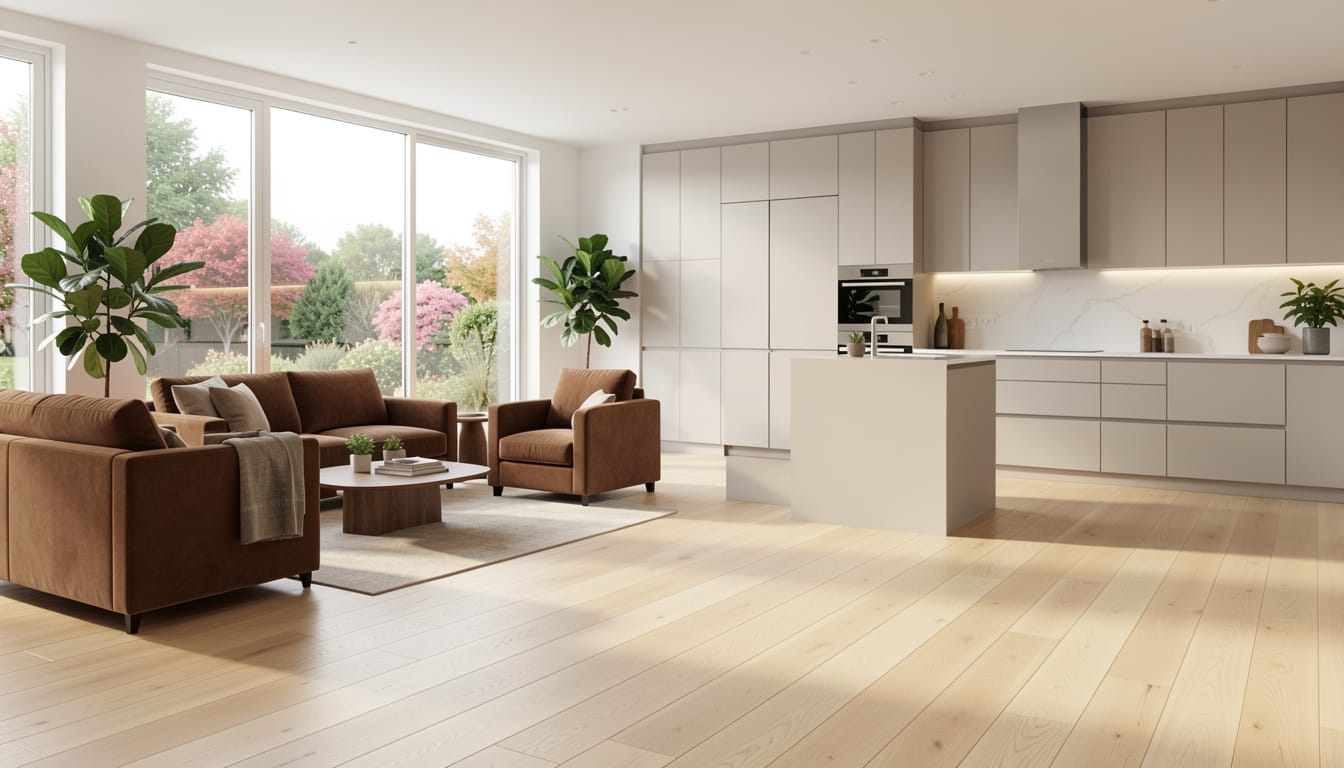
Upgrade your home with durable, stylish LVT vinyl flooring fromLTCape Flooring.
Our team is known for highly rated installations and affordable solutions tailored to your needs.
Ready to revamp your space?
Discover our range today!!!
- By: LTCape Admin" >LTCape Admin
- Tags: affordable vinyl flooring installation, Cheap Vinyl Flooring Cape Town, how much is the cost of installing vinyl flooring, how much is vinyl flooring to install, Vinyl affordable flooring installation cost south africa, Vinyl affordable flooring installation prices, vinyl flooring cost south africa, vinyl flooring installation cape town, vinyl flooring installation cost south africa, Vinyl flooring price per m2, vinyl flooring with installation cost, what is the average cost of vinyl flooring installation
- Category: Affordable Flooring Installation Cape Town
- 0 comment
Leave a Reply